
'The mismatch between valuations and fundamentals is startling,' warns Devangshu Datta

'Q1 is going to bear the brunt of the second wave, exposing full-year GDP forecasts to downward revisions, unless phase-3 of vaccination is executed quickly.'

Commercial banks in the country continued with their improving asset quality trend in the October-December 2021 quarter with slippages remaining under control coupled with healthy recoveries and upgradation of asset classification. The 28-listed banks reported improvement in bottom line with net profits rising 64.1 per cent year-on-year (YoY) and 21.5 per cent sequentially. This is mostly on account of a fall in provisions and contingencies.

Check out some of the stocks that will react on the basis of their numbers in the near term.

JP Morgan has downgraded the Indian information technology sector to 'underweight' as it believes the heydays of the sector are over. Rising margin headwinds in the near-term and the revenue headwinds in the medium-term from a potential macro slowdown, Ankur Rudra and Bhavik Mehta of JP Morgan said in the report, will mean that the sector's earnings upgrade cycle is behind. "We see peak revenue growth behind us and earnings before interest and taxes (EBIT) margins trending down from inflation, mean revision.

A look at six indicators shows all of them have collapsed from positive growth in April to contraction in September.

As the second wave of the Covid-19 pandemic abates, India's automakers are hopeful of a quick recovery in sales volumes, led by better rural sentiment, low interest rates, improved availability of finance and a gradual uptick in business and economic activity. In fact, companies have started to ramp up production already, encouraged by high order books and the growing preference for private transport in both rural and urban areas as a means to avoid infections. In early April, the industry had been bullish as the sales trend for March showed that the effects of the Covid-19 pandemic had been left behind. The total vehicle sales had grown by 77 per cent, albeit on a lower base, and for the past few months, sales had consistently touched 300,000 units per month.

The company's profit stood at Rs 292.79 crore (Rs 2.92 billion) in the year-ago period.

'I cannot cope with the demand. It will take us a couple of months to ramp up production.'

Index heavyweights ITC was the top gainer along with RIL and HDFC

Financial shares were among the top gainers with HDFC leading the gains.

RBI in wait and watch mode as several risks to inflation continue to exist including a sudden reversal of food prices and oil price volatility.

'We don't expect any immediate impact on salaried jobs.'

The breakdown of talks between Greece and its international creditors raised fears of Greece's exit from the euro zone.

YES Bank, Bank of Baroda, SBI, IndusInd Bank, and RBL Bank are amongst the banks, Jefferies says, are most prune to "high risk" emanating from ADAG, Cox & Kings, CG Power, DHFL and Essar Shipping.

'RBI is already late in addressing inflation pressures.'

The retail inflation, which is factored in by the RBI to arrive at its monetary policy, has been on decline since last month. The previous low was 5.54 per cent in November 2019. The government has asked the RBI to restrict the inflation around 4 per cent, with a margin of 2 per cent on the either side.

Investors turned cautious ahead of the US Fed meet outcome later today and July F&O expiry.

India's economy recovered faster than expected in the September quarter as a pick-up in manufacturing helped GDP clock a lower contraction of 7.5 per cent and held out hopes for further improvement on better consumer demand. The gross domestic product (GDP) had contracted by a record 23.9 per cent in the first quarter of the 2020-21 fiscal (April 2020 to March 2021) as the coronavirus lockdown pummelled economic activity.

Revenues rose 7.7 per cent to $1.54 billion during the review period, from $1.43 billion in the corresponding quarter last fiscal.

Asia has opened largely in the green ahead of a raft of Chinese data due during the day.
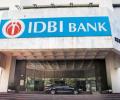
It has Rs 20,500 crore of standard stressed pool outstanding as of June 2018. Thus, the entire stressed book (net NPAs and standard stressed pool) is nearly two times its net worth.

By the end of the June quarter, the top four - TCS, Infosys, Wipro and HCL Tech employed 10,15,000 employees - down by 9,144 employees over the previous quarter.

Investors have turned cautious ahead of the policy meetings of central banks in Japan and the US

'The $80,000 revenue per employee we will get through quite easily.'

Private lenders HDFC Bank and ICICI Bank were the top gainers along with index heavyweights

The employment situation remains dire. Whatever can be done to promote greater low-skill employment should be pursued aggressively, advises former chief economic adviser Shankar Acharya.
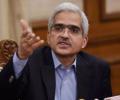
These are the highlights of RBI Governor Shaktikanta Das's statement and resolution of the Monetary Policy Committee (MPC):

It has been a slow 2022 thus far for the primary markets. In the last 8 months, only 16 companies have raised Rs 40,311 crore via the initial public offer (IPO) route, data from PRIME Database suggests. In comparison, 63 companies had raised a cumulative Rs 1.18 trillion via the IPO route in 2021. A large part of the funds raised in 2022 were on account of the two IPOs - Life Insurance Corporation of India (LIC) and logistics firm Delhivery - that raised a total of over Rs 26,000 crore between themselves.

Reserve Bank of India (RBI) Governor Shaktikanta Das on Thursday said the country's economy has recovered stronger than expected from the initial impact of the COVID-19 pandemic, but there is a need to be watchful of demand sustainability after the end of festivities. Speaking at the annual day event of Foreign Exchange Dealers' Association of India (FEDAI), Das said there are downside risks to growth across the world and also in India. It can be noted that the Indian economy contracted by 23.9 per cent in the first quarter of the fiscal year, and the RBI expects the economy to shrink by 9.5 per cent in FY21.

Factors like dedicated recovery teams, centralised follow-up on bad loan accounts and resolutions via NCLT are driving the trend

Unless these companies falter on growth or external and domestic factors play spoilsport, analysts expect them to do well
